
Diabetic foot ulcers
Sores on the feet of people with diabetes, where reduced feeling and blood flow can slow healing.
A foot or leg sore that isn't healing may need a circulation check, not just a new dressing. Our team tests blood flow, treats blockages and provides wound care.
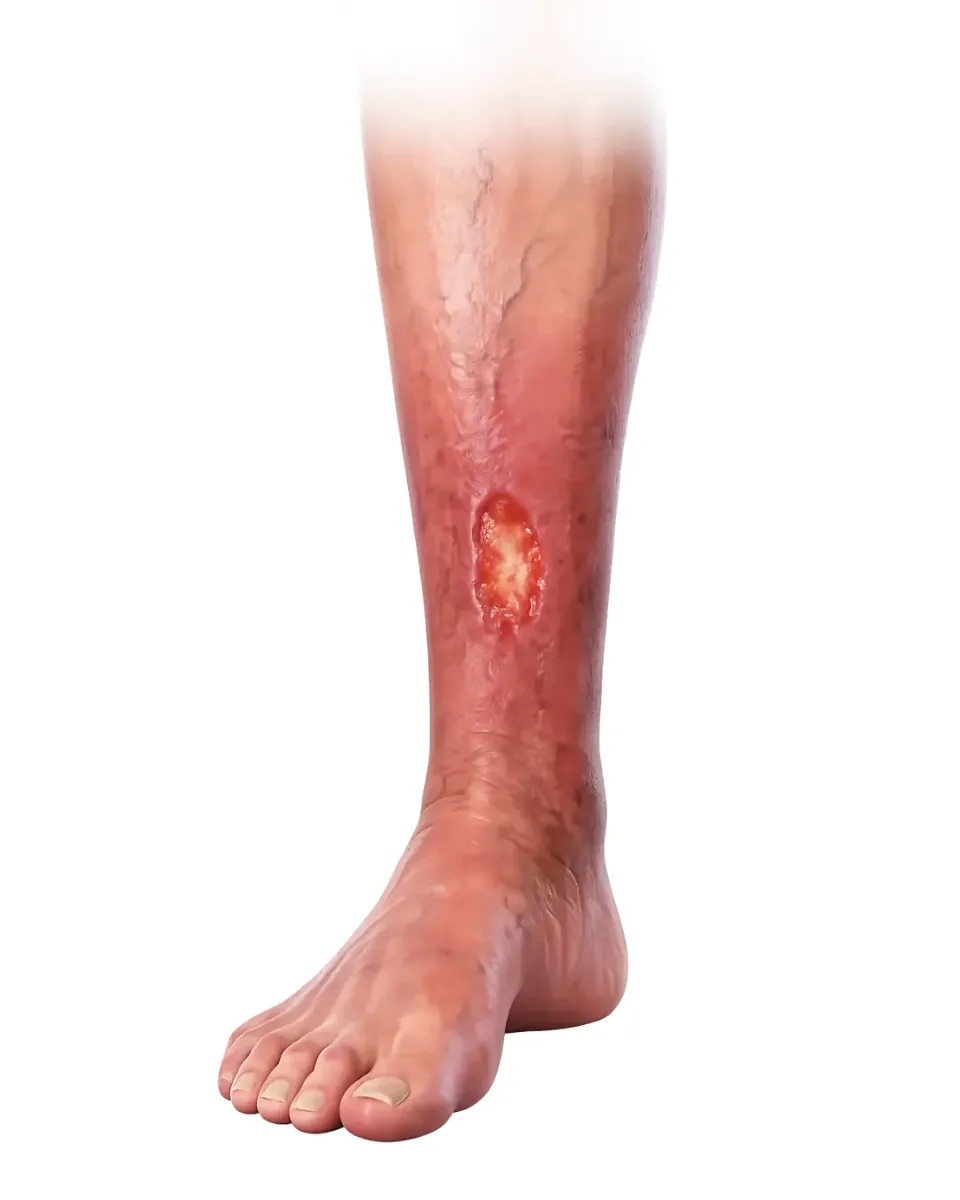
Wounds heal slowly when blood flow is poor. Diabetes can reduce feeling and blood flow in the feet, so a wound may be serious even when it is not painful. Finding and treating poor blood flow early can lower the risk of serious infection and amputation.
Our team treats the circulation problem behind the wound as well as the wound itself. That can include testing your circulation, opening narrowed arteries, specialized wound care and, for certain hard-to-heal wounds, hyperbaric oxygen therapy.
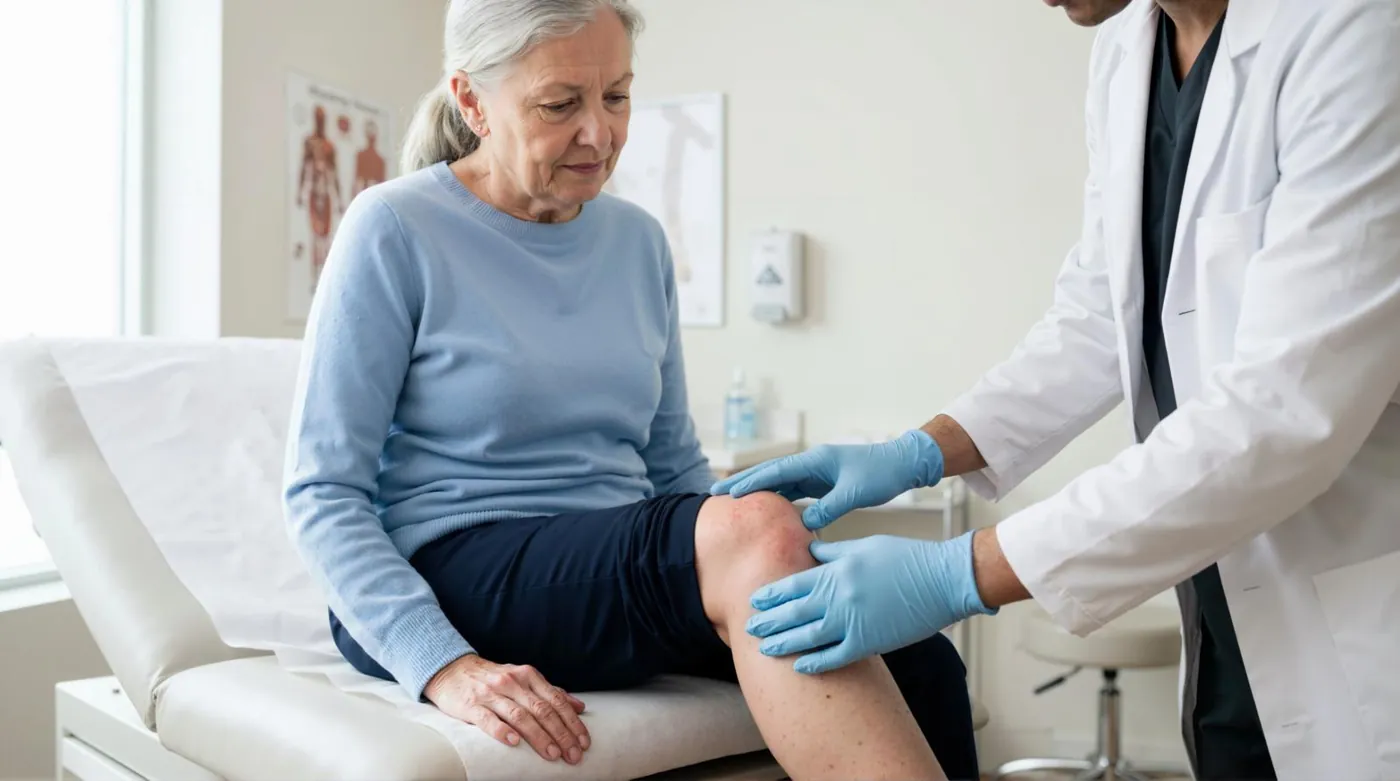
If any of these keep you from the things you enjoy, a visit can help find the cause and the options that fit you.
Sores on the feet of people with diabetes, where reduced feeling and blood flow can slow healing.
Open sores, often near the ankle, caused by leaking veins and blood pooling in the legs.
Sores that won't heal because narrowed leg arteries (PAD) aren't bringing enough blood to the skin.
Rest pain, a nonhealing wound or gangrene can mean severe PAD. Restoring blood flow plus wound care aims to heal the wound and save the limb.
Lower-leg and foot wounds from injury that are slow to heal.
Every plan starts with an evaluation. Your provider reviews your history, imaging and the treatments you have tried, then explains which options may fit.
Painless tests check whether poor blood flow is slowing healing. Skin perfusion pressure measures blood flow in the skin to show how well a wound may heal, and ABI and ultrasound find narrowed arteries or leaking veins.
Who it may help: Anyone with a foot or leg wound that is slow to heal.
When narrowed arteries are slowing healing, angioplasty, stenting or atherectomy can open them from the inside through a small puncture.
Who it may help: People whose wound is not healing because of PAD.
We clean and dress wounds, monitor healing and treat the poor circulation behind them, working with our vascular physicians. Selected advanced tissue treatments may be used for some wounds.
Who it may help: People with diabetic, venous, arterial or traumatic wounds.
You rest in a special chamber and breathe pure oxygen at higher pressure. This raises the oxygen in your blood, which may help some wounds heal.
Who it may help: People with certain hard-to-heal wounds, such as some diabetic foot wounds that haven't healed with standard care.
Closing the leaking vein lowers pressure in the legs, which can ease swelling and help protect your skin. Options include RFA, VenaSeal and Varithena.
Who it may help: People with a healed or active venous ulcer.
Our team checks your insurance before your visit.
We ask how long the wound has been open, check the pulses in your legs and feet, and look at the wound and skin.
Painless tests show how well blood is reaching the wound and whether arteries or veins need treatment.
Your plan may combine wound care, treatment to restore blood flow and, for some wounds, hyperbaric oxygen. We verify your benefits before treatment.
Regular visits monitor healing. Keep checking your feet daily, and call us if the wound looks worse.

Dr. Kumar is a board-certified cardiologist and vascular specialist who leads the Heart Vascular & Leg Center and Advanced Joint Pain & Vascular Center team. He treats arterial and venous disease, nonhealing wounds and joint pain with minimally invasive, image-guided techniques, and trained in joint embolization in Tokyo with Dr. Yuji Okuno.
Wounds heal slowly when blood flow is poor. A foot or leg sore that is not healing may need a circulation check, not just a new dressing.
If you have a sore on your foot or leg that isn't healing, or a toe that turns dark, blue or black, call us right away at (661) 324-4100.
Go to the emergency room for a foot wound with spreading redness, pus or fever, or a leg that suddenly turns cold, pale, numb or very painful.
You rest in a special chamber and breathe pure oxygen at higher pressure, usually over a series of sessions. It may help some wounds heal. Your care team will tell you whether it fits your wound and what your insurance covers.
Check your feet daily for cuts, blisters, redness, swelling or sores. Contact your healthcare team promptly about a new wound, a sore that is not healing, or signs of infection.
Enter your ZIP code or city to see our offices sorted by distance. Procedures are done at our main center; our other offices see patients for consultations and follow-up visits.
Find the center that matches your symptoms. Each one is part of Advanced Joint Pain & Vascular Center, a division of Heart Vascular & Leg Center.